My responsibility
I led the design of the LemFi credit product suite. That covered eligibility and onboarding, spend and repayment, arrears, and the handoffs between products. I was the only designer on the team, working with product, engineering, data, compliance, and our card and credit partners.
Context
LemFi helps immigrants send, save, and spend globally. But moving money home is only half of a migrant's financial life, the other half is building one here.
Most UK users arrive with a thin credit file, so mainstream lenders have little to go on and often say no. That's what Credit exists to solve: fair, transparent products that help our users build credit history, under full UK consumer credit regulation.
We built four credit products under one credit area: a twelve-month instalment card, remittance funded by credit (Send Now Pay Later), a free Equifax score and report (Credit Monitor), and a revolving card for customers who wanted a conventional limit. More than 16,000 active accounts in the first year.
Instalment Credit
01 · Twelve-month instalment card · Launched 2025
Background
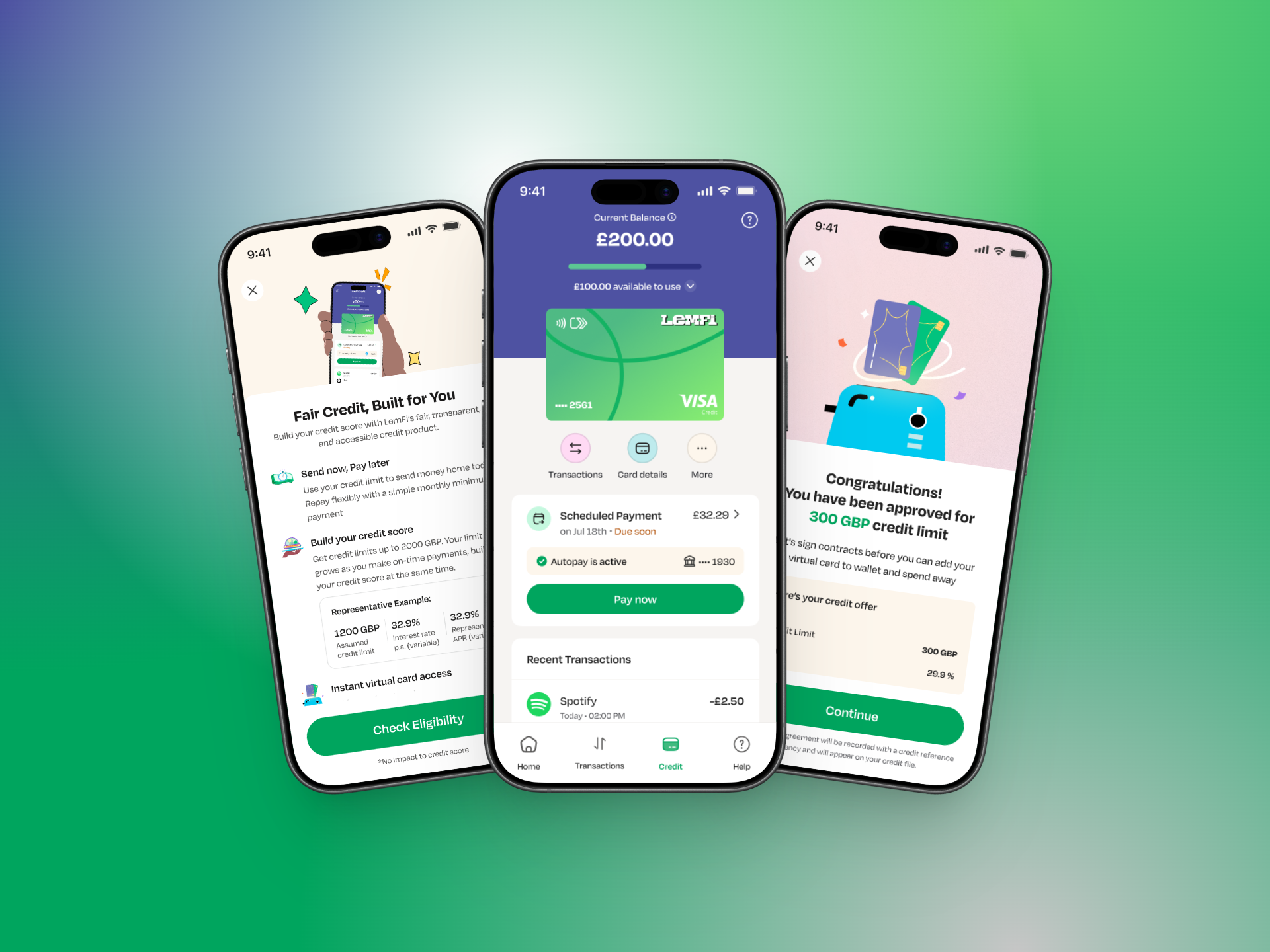
Newcomers often have no UK credit history, so lenders decline them by default. We wanted to offer a first credit line they could actually get approved for: a virtual card that splits each purchase into twelve monthly instalments.
The hardest part for Immigrants is the regulated journey. Users move through a credit decision, e-signed agreement, card creation, and repayment mandate.
Process
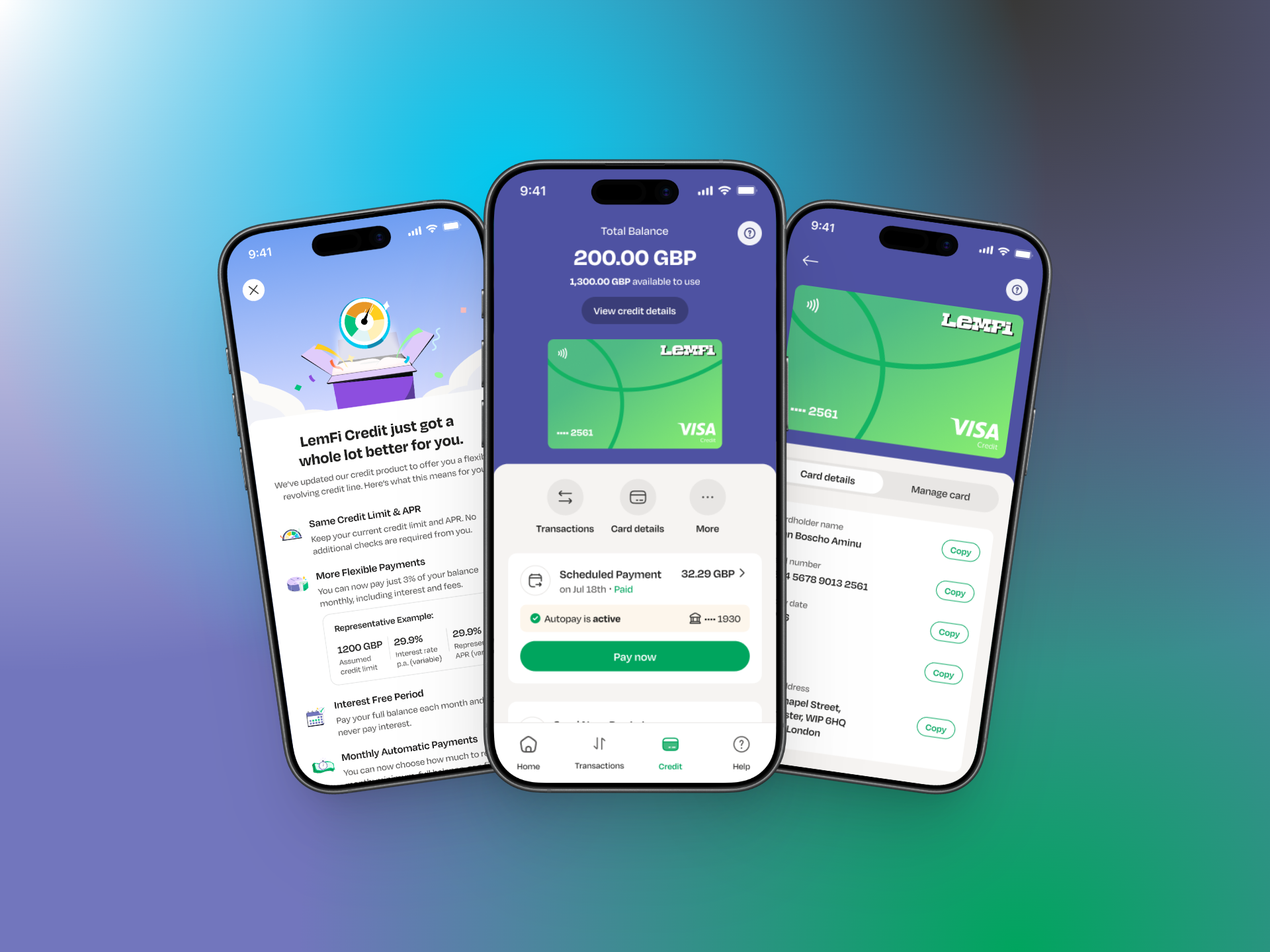
I designed the onboarding and verification flow, card provisioning into Apple Pay and Google Pay so the credit was usable from day one. The credit homepage, scheduled payments, and transaction history were also designed so users could see spend and repayments across the twelve-month term.
Each flow went through the same test-and-iterate loop from discovery, so what shipped was refined against real user behaviour rather than handed off as a first draft.
Results
The instalment card launched as the entry point to the suite: a loan that lets users spread a purchase across a fixed twelve-month plan.
It gave customers a concrete, predictable way to access credit and pay it back, which fit how immigrants manage money in a new country better than open-ended revolving credit.
The instalment card is live as the spine of the credit journey, with 16.8k+ onboarded accounts at scale: proof the regulated, multi-step flow holds together.
Send Now Pay Later
02 · Credit inside remittance · Launched 2025
Background
Many customers send money home every month. On a tight month, they either send less or skip the transfer. Send Now Pay Later lets them send the full amount today and repay over twelve instalments. Credit funds the transfer; it is not buy-now-pay-later on a purchase.
Process
I researched how users send money home: timing, amounts, and what they compare before they confirm. We shipped a first version that let you boost a transfer with credit. Research and support feedback showed people did not understand what they were buying, so uptake stayed low.
I repositioned credit as a payment option inside the send-money flow. The fees and instalments screen breaks out fee, interest, and repayment schedule separately, so the user sees the full cost before they tap send.
A credit-funded transfer adds a fee, interest, and an instalment schedule on top of the normal send flow. Support tickets showed customers mixing up those three charges. We had to explain a new product inside an existing flow, under financial-promotion rules.
Results
Send Now Pay Later has become the engine of the suite. 60% of UK credit-line spend now goes through Send Now Pay Later. 75% of credit customers have used it at least once, more than card spend.
Credit Monitor
03 · Free score and report · Launched 2025
Background
Thin-file customers often cannot see their credit position at all. Without a score or report, many assume credit is not for them.
The problem we set out to solve: give every active customer a free, plain-language view of their credit score and report, the lowest-commitment first step into the suite.
Also, a large share of users are new to the UK and do not have enough data for a score yet. Showing a number with no explanation reads like a rejection. The thin-file empty state needed as much attention as the screen with a full report.
Process
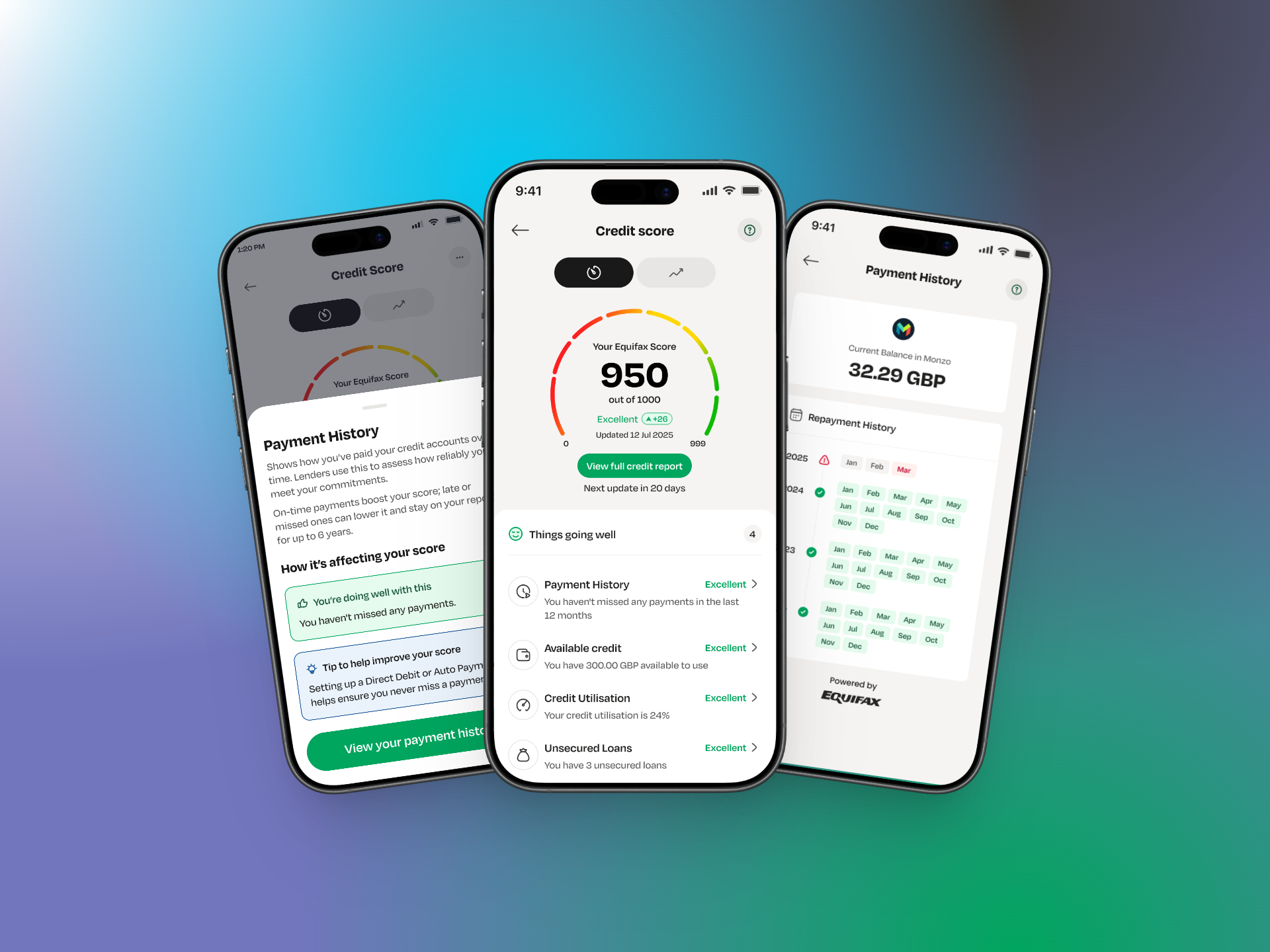
I designed the flow from score overview through the full credit report. Focusing on making an unfamiliar score feel reassuring, not intimidating, with plain-language labels and short explanations for what moves a score up or down.
The thin-file state explains why there is no score yet and what building UK credit history looks like. From there, users can move into Credit or Send Now Pay Later when they are ready.
Results
22k+ customers onboarded, more than the lending book. Monitor became the widest entry point into the suite before customers applied for a line of credit.
Marketing is now using Monitor in UK acquisition campaigns as a low-commitment first step into lending products.
Revolving Credit Card
04 · Revolving limit · Launched 2026
Background
Not everyone wants a fixed instalment plan. Some customers asked for a conventional credit card: an interest-free period and a limit they could carry month to month. With our new credit license, we added a revolving facility alongside the instalment product.
Process
I designed for a clearly distinct mental model (revolving vs. instalment) so the two products never blur. The revolving product also shipped with new repayment features: flexible repayments, click-to-pay, a double payment mandate, and a better autopay experience.
I also designed an assisted transfer flow that let instalment customers move to revolving credit. It walked users through how the two products differ, so the two credit models did not feel confusing.
It went out on a deliberately cautious, phased rollout to a slice of the eligible base, so changes could be validated before wider release.
Results
The Revolving card is live and ramping. It has taken 600+ applications through a deliberately cautious rollout to 10% of the eligible base.
That phased approach proves out the more conventional path to the same goal before opening it wider.